

85% of Marketers Measure ROI, but Only 32% Track It Across Traditional and Digital Mediav
Trackier PR Banner
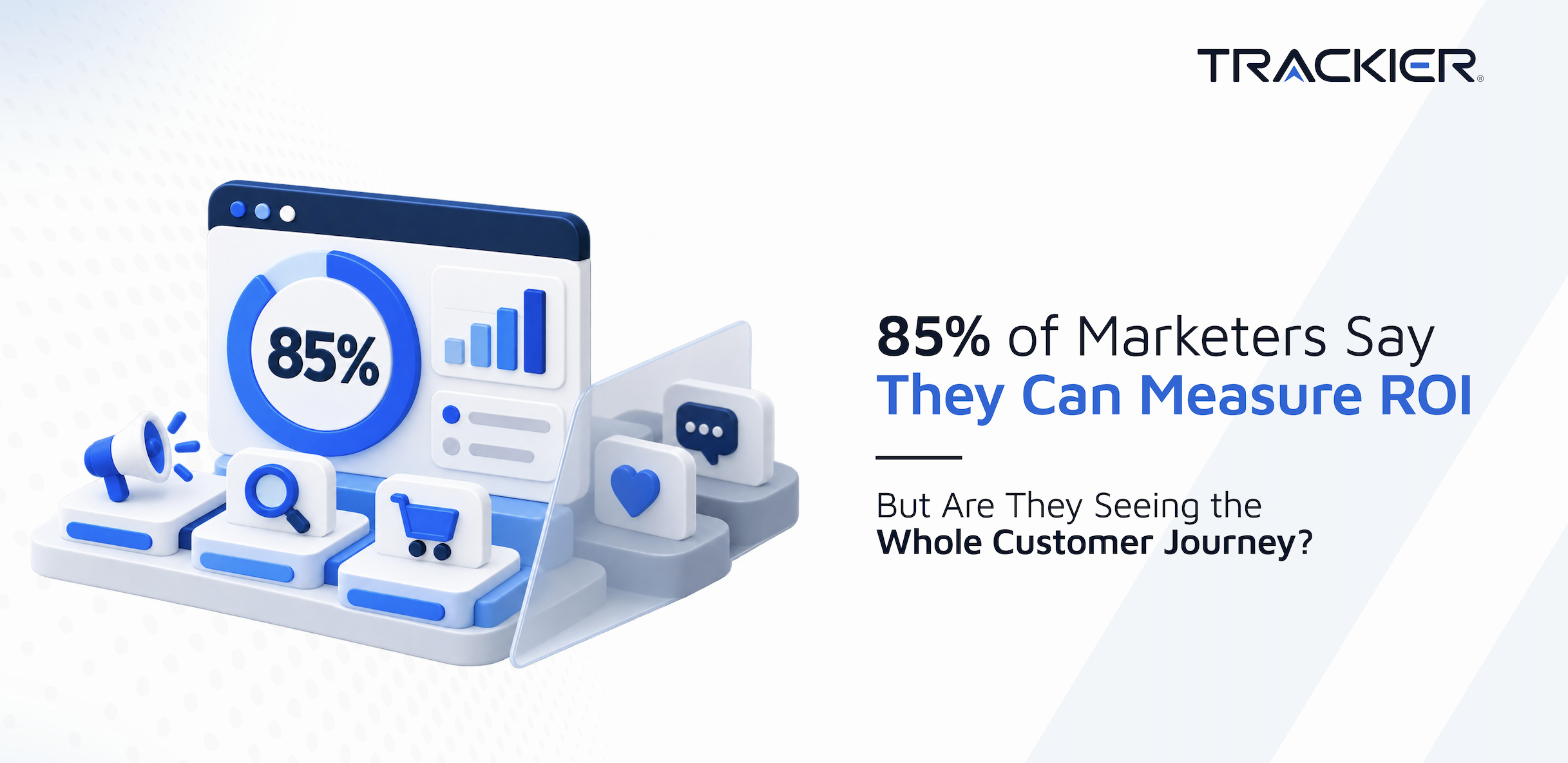
85% of marketers measure ROI, but only 32% track it across traditional and digital channels. Discover why e-commerce brands need better attribution.
NEW DELHI, DELHI, INDIA, October 22, 2026 /EINPresswire.com/ -- E-commerce marketing teams operate through paid search, social media, affiliate networks, display advertising, and e-mail channels. Each channel generates performance data, but consolidating these different data sources into a unified view of revenue generation remains a challenge.Research from Nielsen's The Marketing ROI Blueprint, released in October 2025, highlights this distinction. While 85% of marketers claimed they are able to measure marketing ROI, only 32% of them claimed they measure their ROI across traditional and digital media channels.
The finding raises an important question for e-commerce brands: does confidence in reported results always reflect a complete understanding of marketing effectiveness?
When relying on ROI doesn’t tell the whole truth
A campaign can generate thousands of clicks and major traffic without obtaining the expected sales at the same time. An affiliate may drive significant visitor volumes, while another will have fewer clicks but will bring in much more valuable customers.
Neither case means success or failure. The challenge is to understand what happens after the interaction, and whether the figures that are used for the purpose demonstrate any meaningful business results.
According to the research conducted by Nielsen, there are 38% of marketers that state they now tend to measure their success in terms of sales or ROI.
Nevertheless, measuring ROI does not mean being able to conduct a holistic measurement. A brand can track conversions and revenue accurately within every channel, but its team should understand how the channels cooperate.
As an example, a buyer can notice a product in a social media advertising campaign, visit a website via organic search, and use an affiliate link to buy it after receiving a promo email. In this case, if every channel is looked at separately, it will be complicated to figure out its contribution to conversion.
This is why the idea of attribution is necessary. Without sufficient visibility into the customer journey, teams can come to incorrect conclusions based on accurate data.
Why e-commerce attribution matters
In e-commerce, customer journeys are rarely linear. A customer can look for a product at different sites, react to advertising, and interact with other ad channels before making a purchase.
First-touch attribution refers to the first interaction, while last touch-attribution refers to the last touch before making a purchase. Although both approaches provide a valuable point of view, they can not describe the complete path of the customer via the conversion period.
For e-commerce teams, several critical questions arise:
-Which campaigns introduce customers who eventually purchase?
-Which channels assist conversions without generating a final click?
-Which affiliate partners contribute customers with stronger conversion and revenue outcomes?
-Where do buyers abandon their journeys, and what opportunities exist ti improve conversion?
-How should marketing budgets be distributed based on each channel's contribution to business outcomes?
How can e-commerce teams build attribution confidence
Improving attribution requires consistent measurement, connected data, and alignment with business objectives. The following practices can help e-commerce teams develop a more reliable understanding of marketing performance.
1. Success must be defined beyond engagement metrics
Rather than focusing exclusively on impressions and clicks, marketing teams should establish clear campaign objectives and evaluate metrics that reflect business outcomes.
These may include conversion rates, customer acquisition costs, revenue, and return on ad spend (ROAS).
2. Integrate data from different channels
A unified reporting framework should incorporate data from paid advertising, affiliate partnerships, organic search, and other marketing activities.
Consistent tracking methods, standardized conversion definitions, and comparable reporting practices can help teams evaluate performance across channels more effectively.
3. Evaluate the complete customer journey
Use attribution models suited to the available data and business objectives. Comparing first-touch, last-touch, and multi-touch perspectives can help reveal how different interactions contribute to conversions.
No single attribution model should automatically be treated as a perfect representation of customer behaviour. Comparing multiple perspectives can provide a more balanced understanding of channel contributions.
4. Validate tracking and integrations regularly
Review tracking links, conversion events, postbacks, and integrations to identify discrepancies before they affect campaign decisions. Consistent validation helps teams distinguish genuine performance changes from measurement errors and tracking issues.
5. Review performance continuously
Regular campaign reviews can help teams investigate unexpected results, identify changes in conversion quality, and adjust budgets when supported by reliable evidence. This becomes particularly important during high-demand shopping periods, when delayed insights can reduce opportunities to optimize campaign performance.
From measuring ROI to understanding what drives it
Nielsen’s findings highlight an opportunity for marketers to move beyond confidence in individual metrics towards a more comprehensive understanding of marketing effectiveness.
The report also found that 60% of marketers incorporate both reach and frequency and ROI into their cross-media measurement strategies, suggesting that broader measurement approaches form part of the industry’s response to the challenges of evaluating marketing performance.
For e-commerce brands, the objective is to understand how marketing activities contribute to conversions and revenue, rather than treating every channel's reported results as an independent measure of success.
Ultimately, the challenge is not simply to measure ROI accurately, but to establish whether measurement practices provide enough context to explain what drives that return. A more connected view of the customer journey can help marketing teams make better-informed decisions about campaign performance, channel contributions, and budget allocation.
Fahad Khan
Trackier
Visit us on social media:
LinkedIn
Instagram
Facebook
YouTube
Legal Disclaimer:
EIN Presswire provides this news content "as is" without warranty of any kind. We do not accept any responsibility or liability for the accuracy, content, images, videos, licenses, completeness, legality, or reliability of the information contained in this article. If you have any complaints or copyright issues related to this article, kindly contact the author above.
