

How Can a Complete Factory Automation Planning Solution Reduce Long-term Operational Costs?
Q1: What Does "Complete" Actually Mean in Factory Automation Planning — and Why Does the Definition Matter?
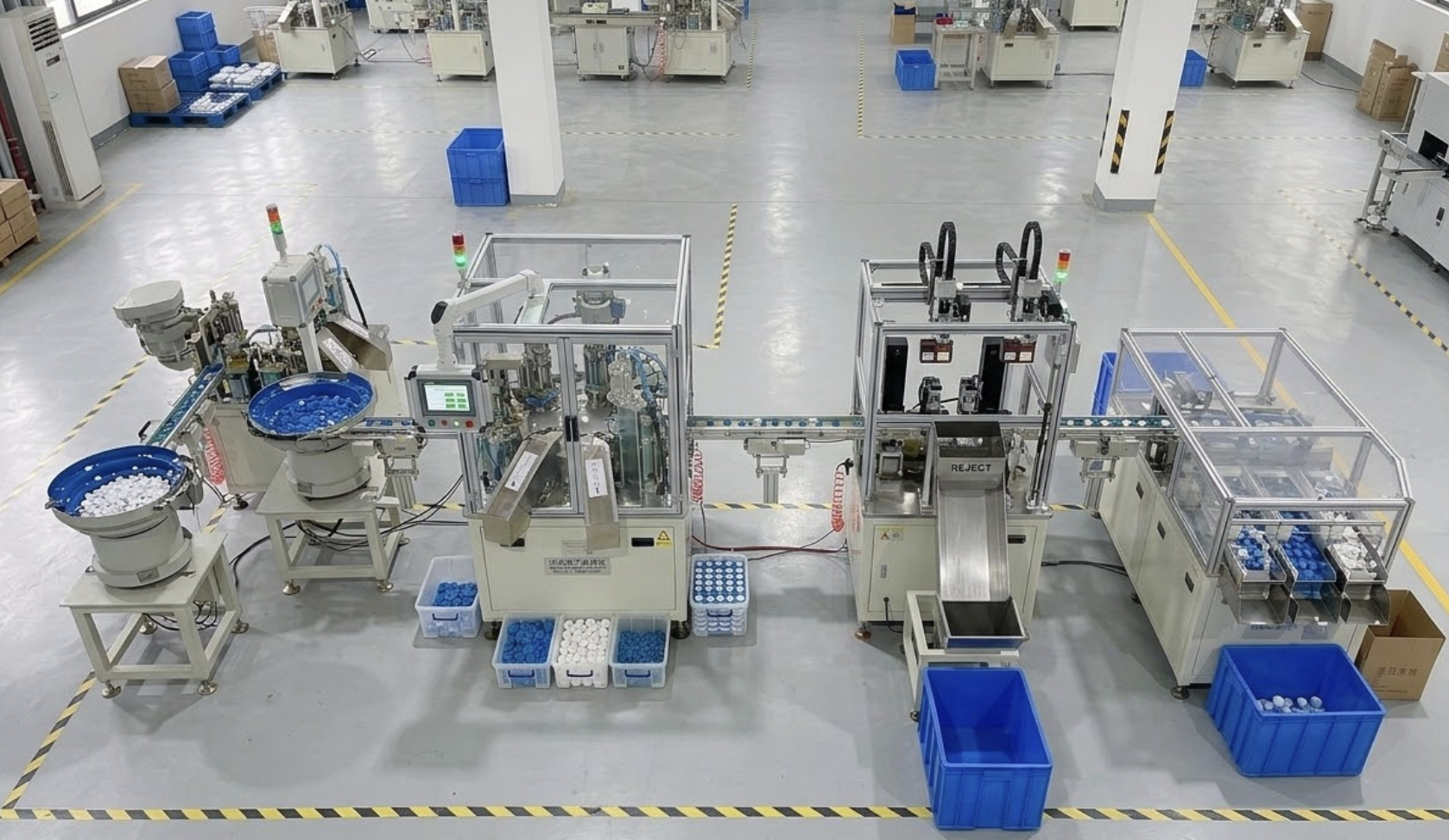
Most manufacturers approach automation one machine at a time. A complete planning solution, by contrast, designs the entire production workflow as a unified architecture — from component feeding through assembly, inspection, and output — under consistent technical standards.
The definition matters because fragmented procurement creates integration gaps. Mixing machines from different vendors with incompatible control protocols, mismatched communication standards, and separate spare parts ecosystems generates ongoing hidden costs: diagnostic delays at shift boundaries, inconsistent detection logic across stations, and maintenance staff who cannot transfer knowledge between machines. These gaps rarely appear on a capital expenditure spreadsheet. They accumulate quietly through production efficiency losses.
A supplier offering a cross-category product portfolio — covering spray pump assembly machines, emulsion pump assembly machines, cap assembly machines, and trigger pump assembly machines as a unified ecosystem — eliminates these gaps at the design stage. The cost reduction starts before a single machine reaches the production floor.
Q2: How Does Single-Source Production Line Sourcing Translate Into Lower Day-to-Day Operating Costs?
Day-to-day operating costs in automated production fall into four buckets: energy consumption, operator labor, maintenance labor, and unplanned downtime. Single-source sourcing reduces costs across all four.
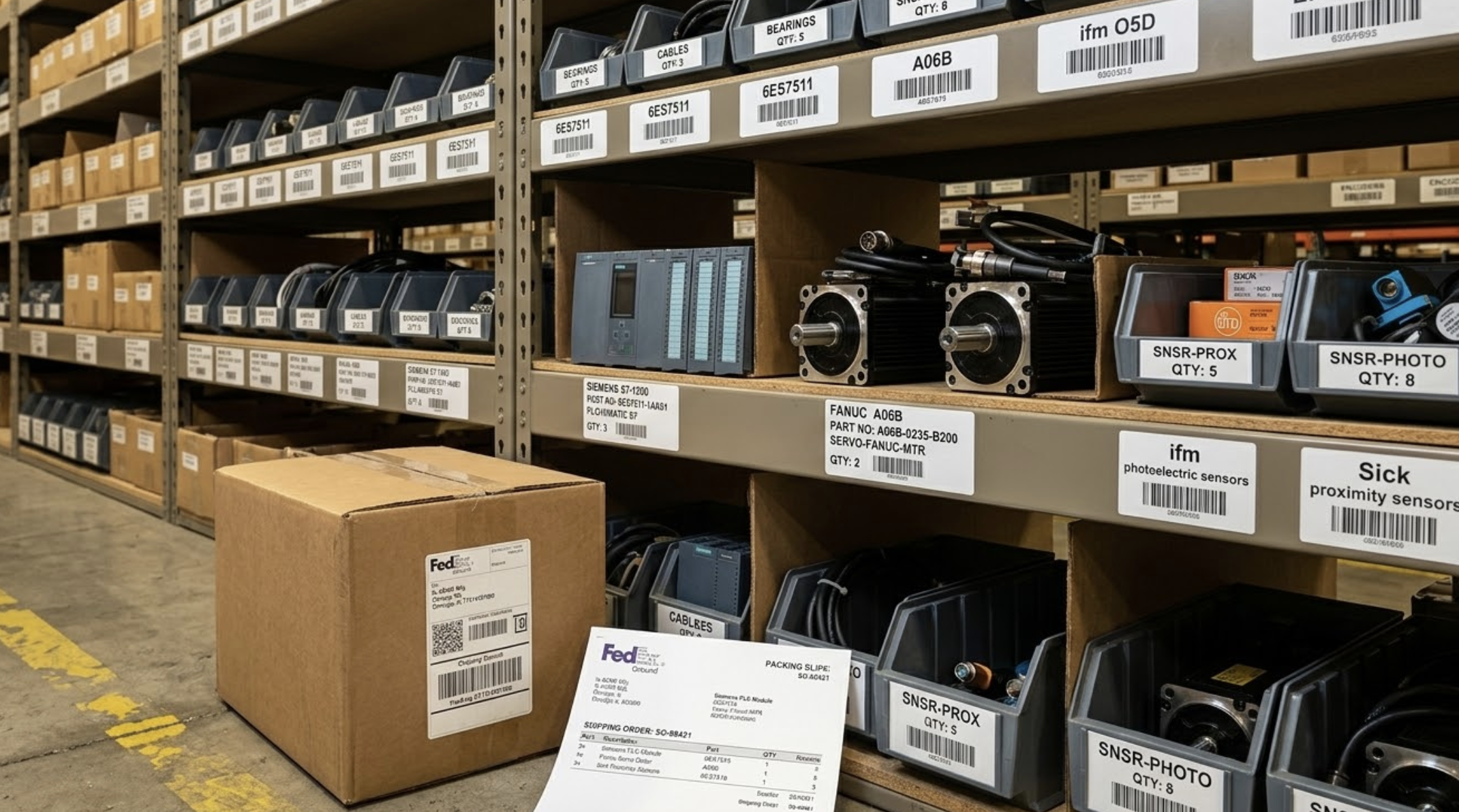
Machines designed by the same engineering team share compatible PLC architectures and component standards. In practice, a single trained technician can manage a 4-to-6 station line — compared to the 2-to-3 vendor-specific technicians typically required when sourcing from multiple suppliers. That staffing difference alone represents a measurable annual labor cost reduction on multi-shift operations. Spare parts logistics simplify considerably when a single supplier handles EMC express delivery for all critical components. Unplanned downtime costs shrink when a 2-hour response service level agreement applies to the entire line rather than varying by vendor.
Ningbo Huagong Automation Technology Co., Ltd. structures its after-sales model precisely around this logic. The commitment covers 2-hour response times, on-site engineer dispatch when remote resolution falls short, a tiered warranty of two years on core components including PLC systems and servo motors plus one year on full equipment, EMC express spare parts delivery, and daily communication between after-sales personnel and client equipment management teams. Taken together, these elements function as a cost-management system rather than a service add-on.
Q3: What Role Does the Supplier's Factory Infrastructure Play in the Long-Term Cost Equation?
A supplier's internal factory layout reflects the operational discipline embedded in every machine they ship. Factories with dedicated technical departments, separate debugging areas, assembly areas, detection areas, and processing areas apply systematic quality controls at each production stage before equipment leaves the facility.
This pre-delivery rigor reduces post-installation adjustment costs. It shortens commissioning time and lowers the probability of early-stage defects that generate warranty claims and unplanned line stoppages. Huagong Automation's factory maintains distinct functional zones — technical department workspaces, multiple debugging areas, detection areas, processing areas, assembly areas, and shipping areas — as evidence of a structured manufacturing process. Quality assurance transfers into the delivered equipment through this internal discipline, rather than depending on the buyer to identify problems after installation.
Q4: How Do Quality Certifications Reduce the Financial Risk of International Equipment Procurement?
For manufacturers sourcing automation equipment across borders, certification gaps create financial risk well beyond the equipment purchase price. Equipment lacking EU CE certification can face import compliance costs, customs clearance delays, or retrofitting requirements to meet local safety standards. Each of these outcomes adds cost that the original procurement budget did not anticipate.
ISO 9001 certification documents a supplier's quality management system across design, production, and service processes. It reduces the probability of receiving equipment that deviates from agreed specifications. For buyers operating in regulated markets, certified equipment also simplifies internal audits and reduces downstream liability exposure.
Huagong Automation holds ISO 9001, EU CE certification, and High-Tech Enterprise certification (2024). For international procurement specifically: CE certification eliminates the retrofitting costs that non-compliant equipment incurs at EU customs — typically ranging from several thousand to tens of thousands of euros depending on machine category. ISO 9001 reduces the probability of specification deviations that trigger costly rework or replacement requests after delivery.
Q5: Can Non-Standard Customization Capability Actually Lower Long-Term Costs — or Does It Just Add Complexity?
Non-standard customization appears, at first glance, to add cost through longer lead times and higher engineering investment. Over a multi-year production lifecycle, however, equipment designed precisely around a factory's actual floor plan, upstream process, and specific component tolerances consistently outperforms catalog machines adapted to approximate specifications.
The difference compounds over time. Fewer operator workarounds compensate for imprecise feeding mechanisms. Lower scrap rates result from assembly stations calibrated to the actual tolerance range of the cap or pump component. Modification costs decrease when specifications evolve, because the original engineering documentation reflects the production environment accurately.
Huagong Automation's pre-sales process builds customization precision into the engineering phase. On-site technical consultation, production data collection, design feasibility analysis, and collaborative refinement before order confirmation define the workflow. The company's stated business scope explicitly covers non-standard equipment development based on client-specific requirements, localization design of imported equipment, and custom production line development. This is cost prevention through engineering discipline — not cost addition.
Q6: How Does a Well-Structured After-Sales Support System Convert Into Measurable Cost Savings Over Time?
The financial value of after-sales support becomes clearest when measured against the cost of unplanned downtime. For a production line running multiple shifts, each hour of stoppage carries a quantifiable output loss. A supplier with structured response commitments and proactive maintenance communication directly compresses the average duration and frequency of those interruptions.
Free installation and commissioning eliminate the startup contractor costs that third-party equipment often requires. The financial impact of spare parts logistics is less obvious but equally real: EMC express delivery reduces average waiting time for critical components from 2-to-4 weeks (standard international shipping) to 3-to-5 business days — a difference that directly caps the maximum duration of an unplanned stoppage on a production-critical line.
These elements collectively define the difference between a transaction-based vendor relationship and a long-term operational partnership. That distinction is the structural foundation on which sustained cost reduction actually builds.
The Long-Term Cost Picture: Why Every Layer of the System Counts
A complete factory automation planning solution reduces long-term operational costs not through any single mechanism, but through the compounding effect of aligned decisions across planning, equipment design, customization, certification, factory quality discipline, and after-sales structure. Each layer removes a cost category that would otherwise accumulate through the equipment lifecycle — often invisibly and often underestimated in standard procurement analysis.
Manufacturers who approach automation as a long-term operational investment rather than a one-time capital expense consistently find that supplier capability across all these dimensions carries more financial weight than purchase price alone. The savings are real. They are just distributed across a longer time horizon than a single budget cycle typically captures.
For full product specifications and factory automation planning consultation, visit https://www.hgautomachine.com/.
Ningbo Huagong Automation Technology Co., Ltd.
Ningbo Huagong Automation Technology Co., Ltd.
+ +86 15827273819
Legal Disclaimer:
EIN Presswire provides this news content "as is" without warranty of any kind. We do not accept any responsibility or liability for the accuracy, content, images, videos, licenses, completeness, legality, or reliability of the information contained in this article. If you have any complaints or copyright issues related to this article, kindly contact the author above.
